
Invest in your child's future: Tips for saving for university as a parent
As a parent, it’s natural to think about your child’s future and how you might give them the best possible chance of success in life. Among concerns for mental health and wellbeing, financial stability later in life is ranked among some of the top concerns by parents in South Africa and globally. Research confirms that the level of post-school study pursued by high school graduates is strongly correlated with earning potential later in life. The real question is not whether it’s a good idea for your child to study after high school, but rather how you could think about supporting them with the big financial outlay required, whether it’s for university or any other tertiary institution. In South Africa, this question is even more relevant and challenging in attempting to break the cycle of generational inequality that exists.
By UCT Online High SchoolPublished 4 min read

Determine the cost of university or post school studies
Before you can start saving for your child’s tertiary education, it’s essential to determine the potential costs. The cost of tertiary education can vary widely based on the institution and the degree or diploma. It’s important to research the universities and programmes that your child is interested in, and the bursaries and scholarships they offer, to make a realistic estimate of the potential costs. According to data from Old Mutual, the average cost for a year’s tuition at university in South Africa in 2023 is R55,900, and this is expected to have increased by over 70% in 2030.
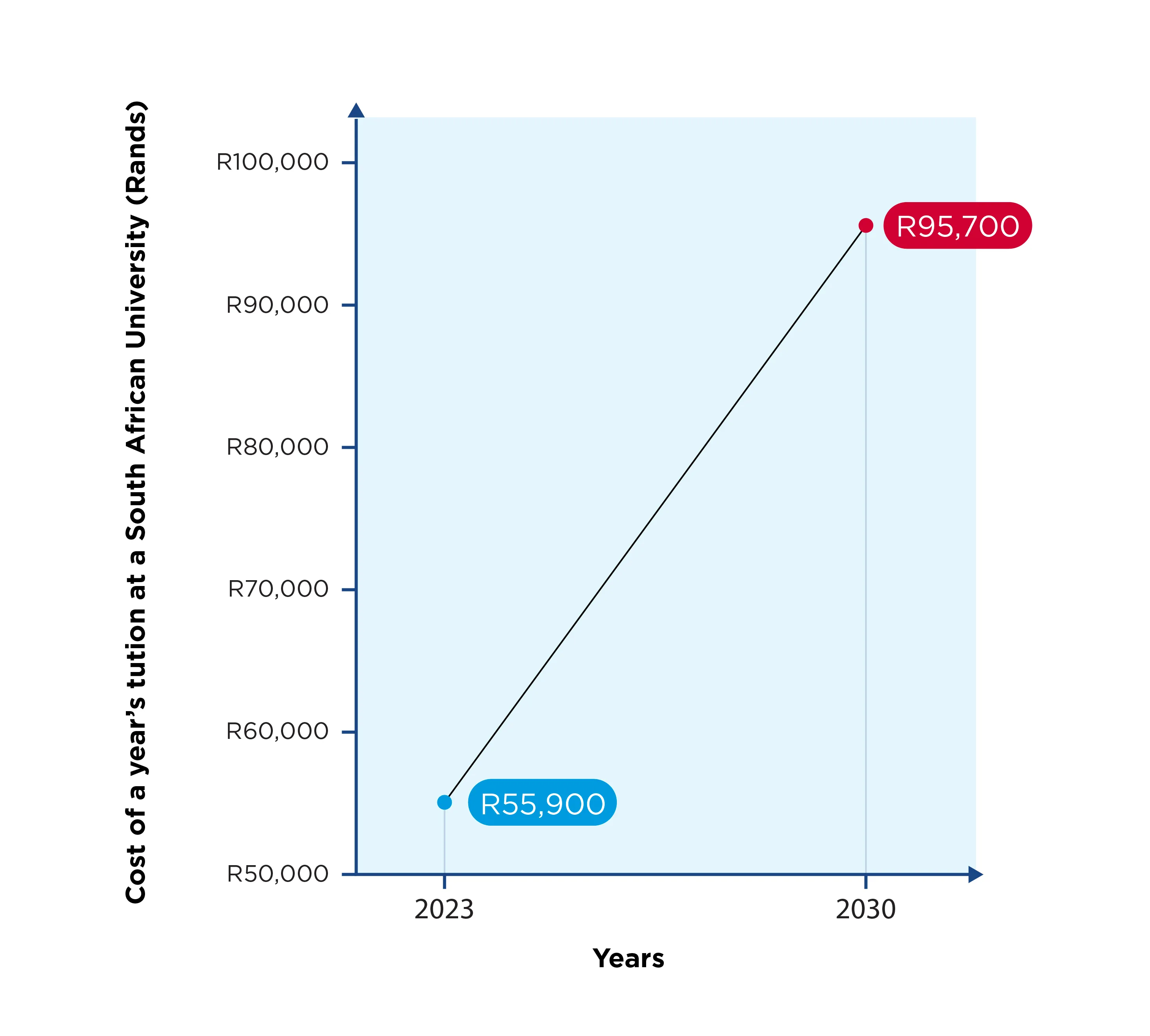
Tuition fees are a significant cost for university education, but they’re not the only expense. Other costs to consider include accommodation, textbooks, transportation, and other living expenses. When determining the total cost, especially if it’s several years until your child starts university, you’ll also need to consider the inflation rate. According to the World Bank, South Africa’s inflation rate was 4.6% in 2021. Keeping track of figures like this can help you with your financial planning.
UCT Online High school has developed a useful guide and cost calculator to assist parents in determining the disposable income available for education. While this tool is focussed on saving for high school, it can still help you to conduct the valuable exercise of calculating your disposable income and determining how much of that you might be able to allocate to saving for university or tertiary studies.
Set goals and start saving early
Once you’ve estimated the potential costs of university education it’s essential to set realistic savings goals. Determine how much you need to save each month or each year to reach your goals.
Starting early is key to saving for your child’s university education. The earlier you start the more interest you can earn on your savings, and compound interest can make a significant difference in the amount of money you’ll have saved when it’s time for your child to attend university, even if your monthly contributions are small.
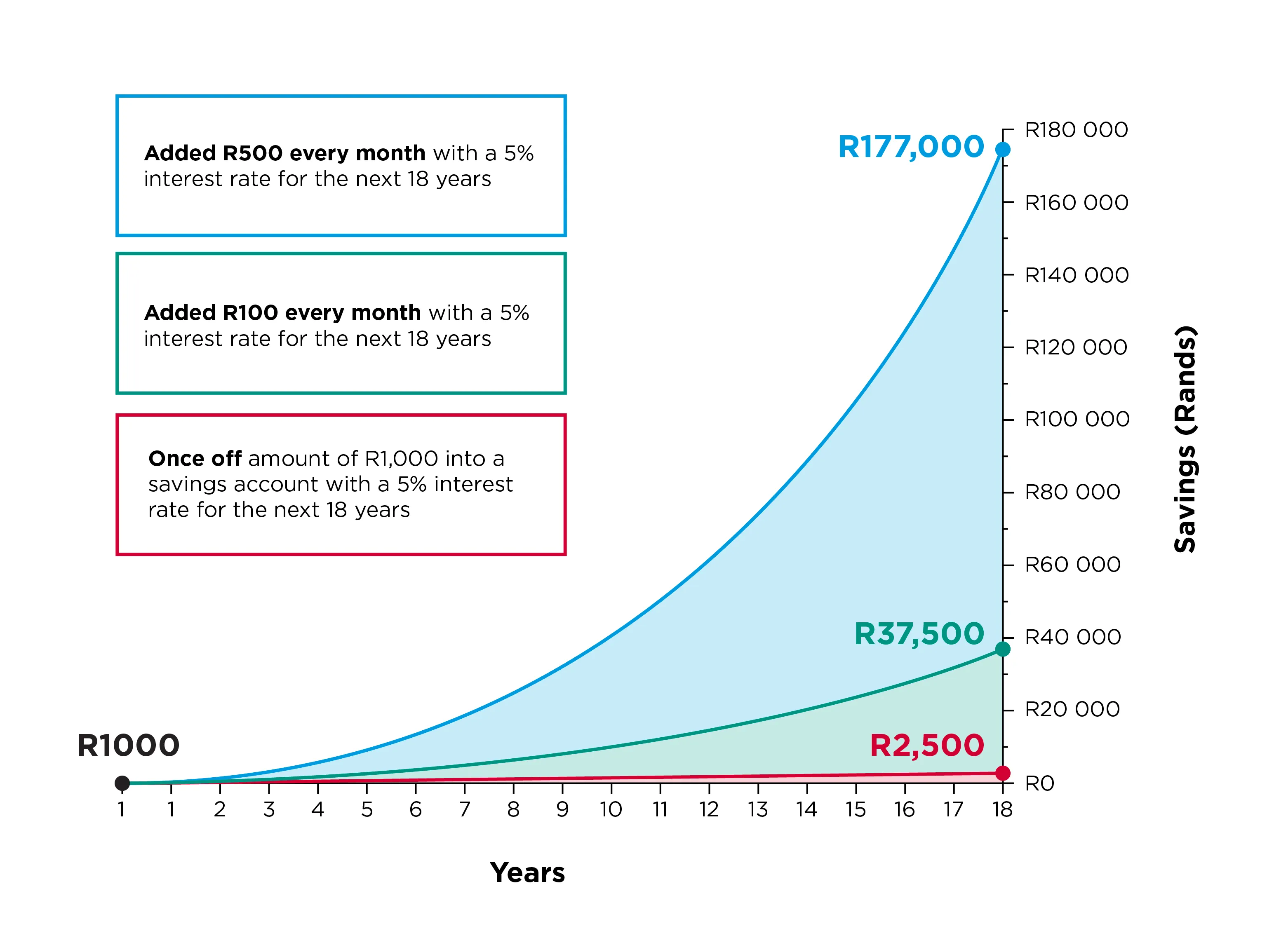
For example, if you’ve just had a baby and put a once off amount of R1,000 into a savings account with a 5% interest rate for the next 18 years, you will only have around R2,500 when your child is ready to start university. However, if you had added just R100 to that account each month, you would end up with almost R37,500. If you could add R500 each month, you would have over R177,000 by the time your child starts university.
Invest your money wisely
When saving for your child’s university education, it’s important to invest wisely. Consider investing in a tax free savings account, a money market account, or a unit trust fund to maximise your returns. You could even use a combination of all three. Diversifying your investments (not putting all your eggs in one basket, so to speak) can provide growth and income to help reach your savings goals. Consider working with a financial advisor if you’re unsure which route to take.
Saving for your child’s university education or post school studies may seem overwhelming, but with the right strategies and tools, it’s possible to achieve your savings goals. Start early, determine the potential costs, set realistic savings goals, and invest wisely. Remember, saving for your child’s university education is an investment in their future success, and it’s never too early to start.
There is also no shame in admitting that you won’t be able to afford university fees. In this case, exploring options like the National Student Financial Aid Scheme (NSFAS) and student bursaries is a good place to start along with equipping your teenager to start considering how they might start doing some financial planning to invest in their education as they enter adulthood.
Thinking differently about the overall cost of schooling
Another way of thinking about your child’s entire education journey is to look to save more in high school so that you can invest more in tertiary education. UCT Online High School adds more value to learners and guardians through our innovative and affordable offerings. Download our information pack to learn more about our CAPS and Cambridge International curriculums.